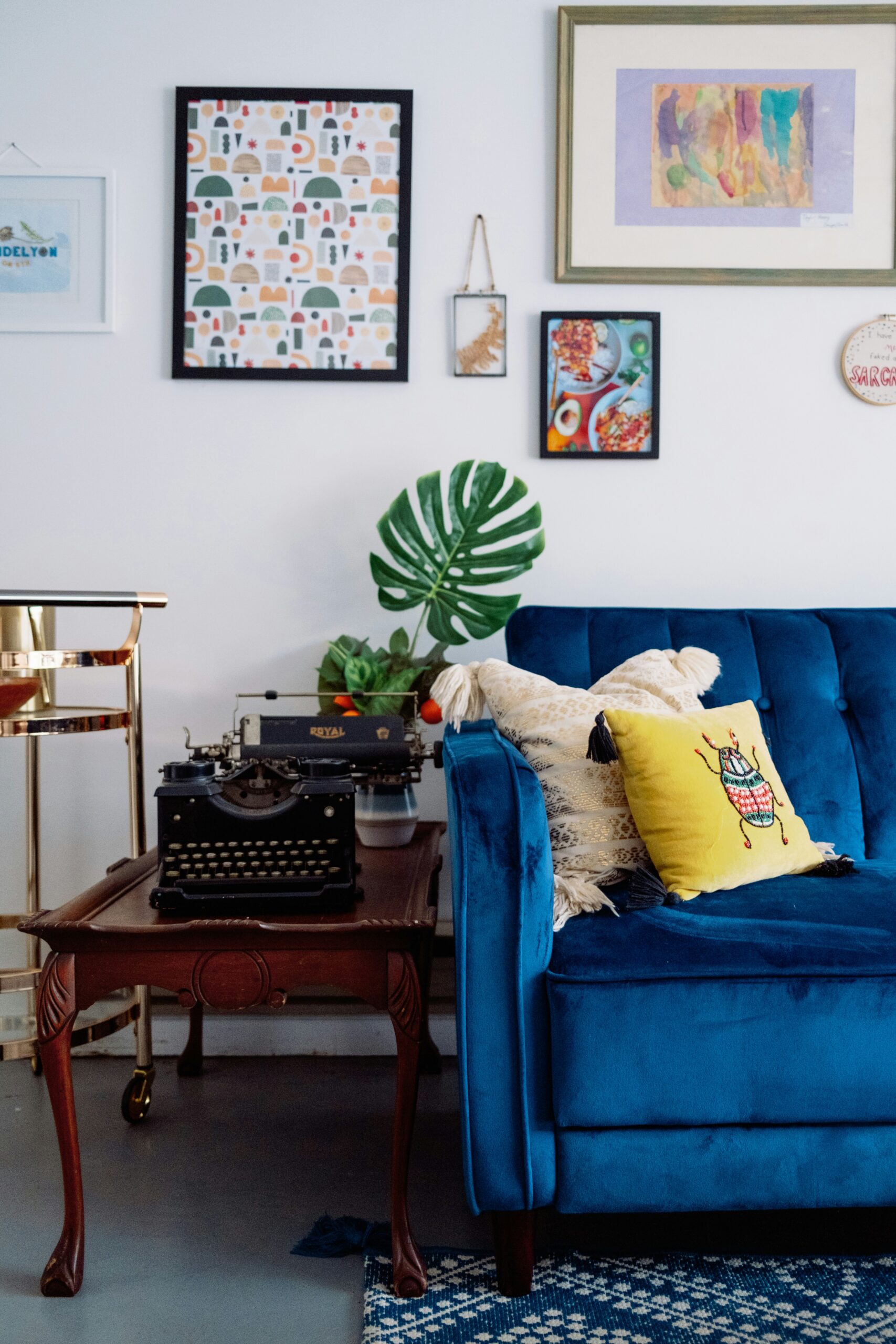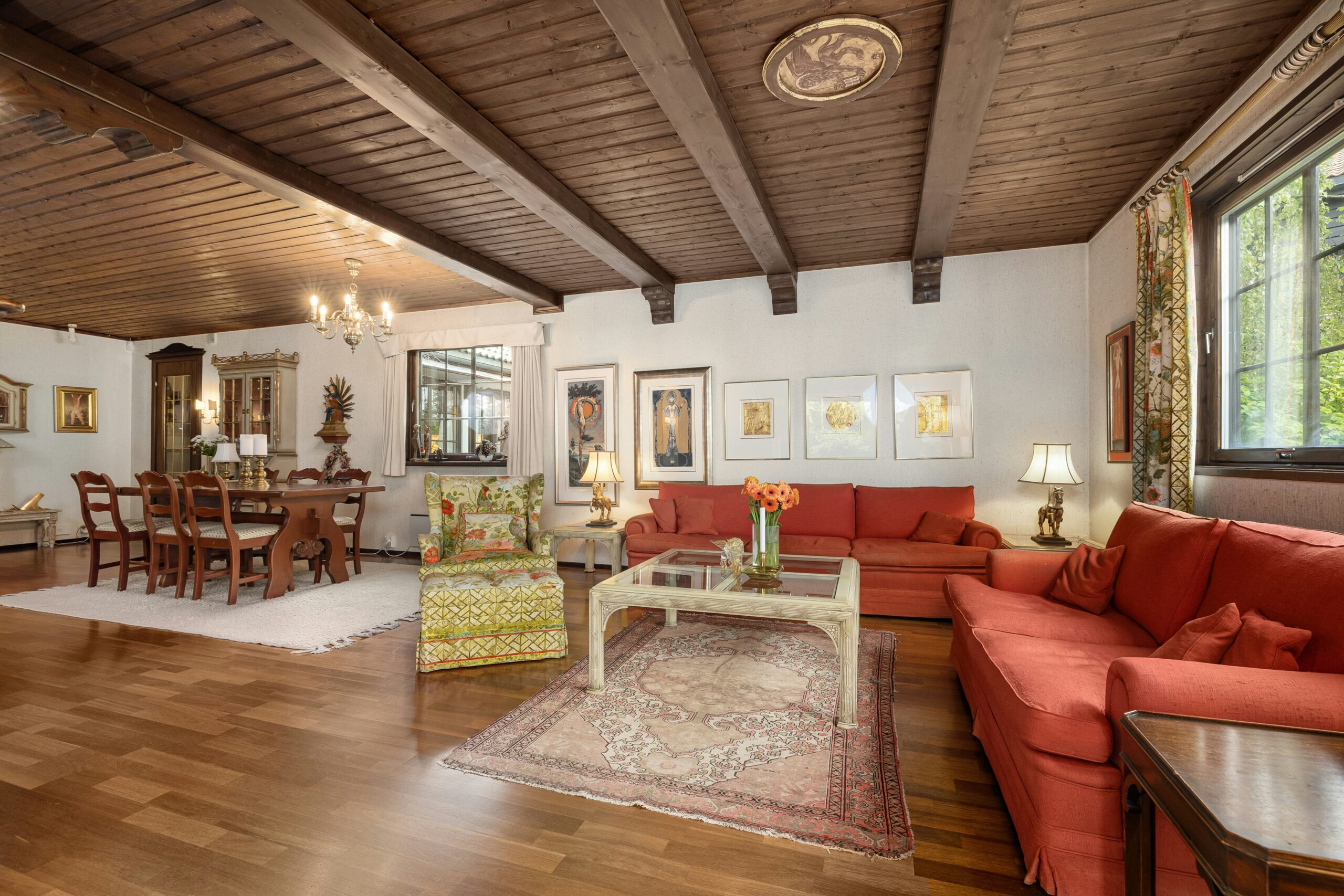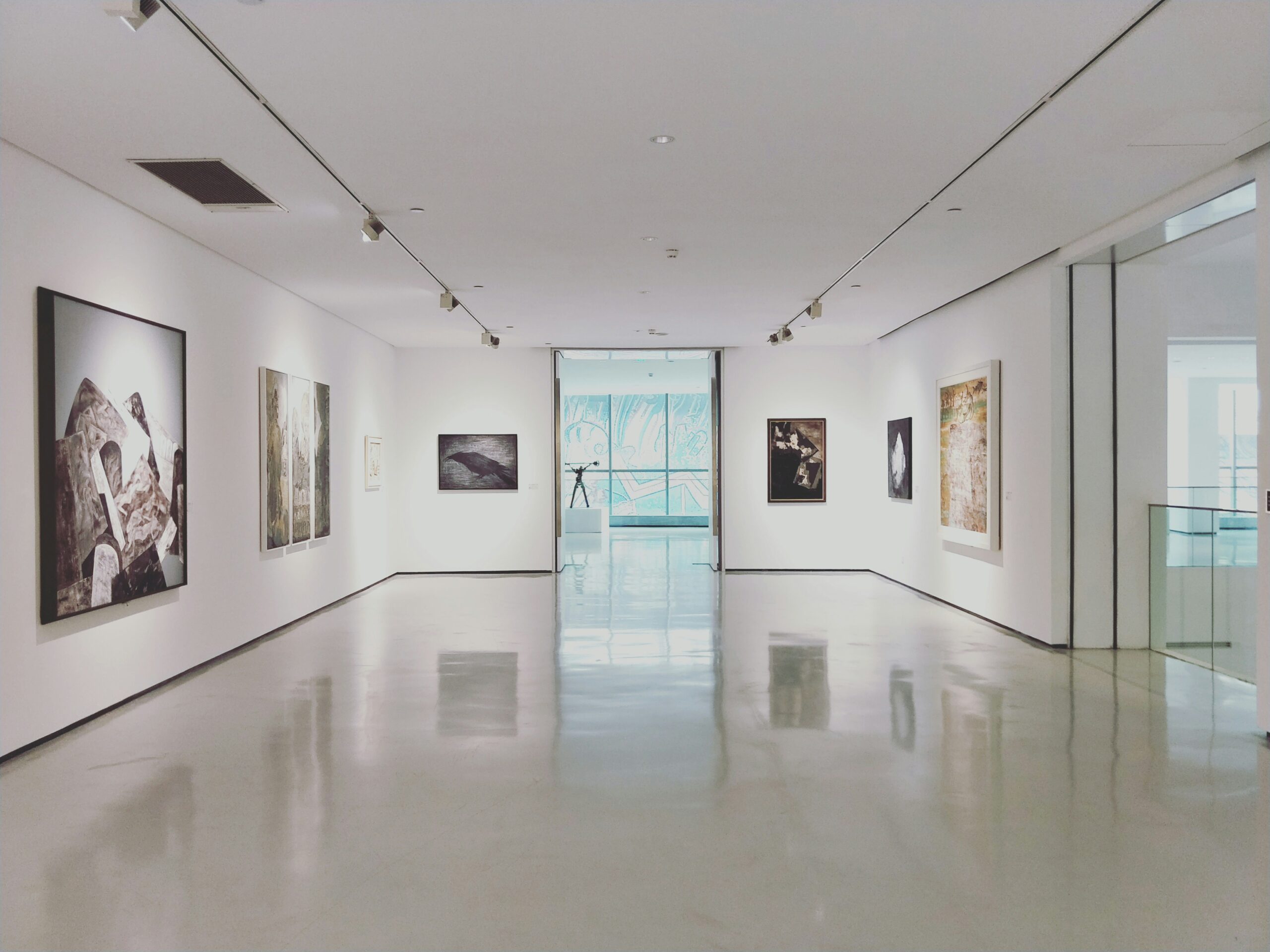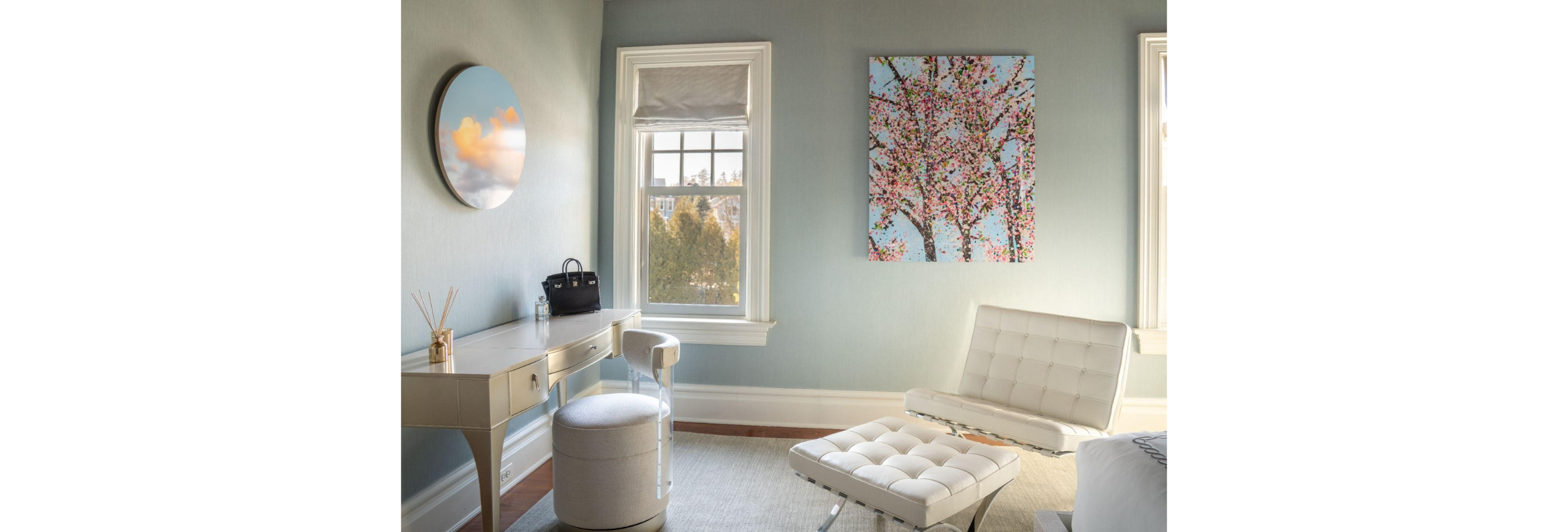

(Photo credit: Amanda Berce, Artist: Damien Hirst)
A beautifully furnished room can still feel strangely anonymous. The architecture may be carefully considered, the proportions thoughtfully resolved, and the materials chosen with expensive precision, yet something can remain missing. Increasingly, that missing element is not another design object. It is something with a point of view.
Art has long occupied a complicated place within residential design. It can be treated as the final square of wall to fill, selected after the furniture arrives and the lighting is installed. Yet the most memorable interiors tend to suggest a different relationship with what hangs inside them. The artwork feels connected to the people who live there, carrying some trace of their history into the room.
Ana Zampino O’Neill has built her work around that idea. As co-founder and art advisor at Atelier Modern in Larchmont, New York, she works alongside interior designers and homeowners to determine which works can give a space its emotional character. Her role is distinct from that of interior design itself. She explains, “We support designers by helping to source art. We can find art that will complement the colors, the furniture, the lighting, and the objects in the room.”
According to O’Neill, sourcing art for a finished interior is an entirely different discipline from selecting furniture. A designer may know exactly what scale a room demands or which palette will hold the architecture together. O’Neill’s expertise lies in narrowing an enormous art market until the possibilities become genuinely relevant to the person and the space.
That process can begin with practical questions. A designer may need a particular dimension or palette, or want a commissioned work that responds to an architectural detail. Atelier Modern can source outside its own artists and inventory, reaching into other galleries, auction houses, and directly to artists when the right piece lies elsewhere. “I don’t only look at the art that we have on our website or from our artists,” O’Neill explains. “I come up with different ideas from other galleries and auction houses, or I will go to outside artists directly.”
The more interesting question, however, comes after color and scale have been settled: Does the work actually belong to the person who will live with it?
O’Neill believes the homeowner should have a meaningful role in that decision because art can reveal something more intimate than the furniture chosen for a room. A home already reflects its owner through architecture and lifestyle; the artwork can deepen that portrait. “I think that generally, someone’s personality is going to be expressed through their home,” she says. “They probably bought the house that they did, whether it’s contemporary or not, because of who they are and how they like to live. And so it all ties together.”

(Art by Kate DeOssie)
One commission brought that principle into focus. A family room in New York required a specific palette and scale, but the eventual work was based on a photograph from Vancouver, a place with personal significance to the family. The piece could satisfy the demands of the room while carrying a memory into it. The art was no longer simply compatible with the interior. It belonged to the story of the people inside it.
A similar logic shaped O’Neill’s selection of a Damien Hirst for a client’s bedroom overlooking the water in Larchmont. The contemporary work suited the evolved character of an older home, while its connection to the client’s European background gave it another layer of meaning. The surrounding architecture and waterfront view remained powerful elements of the room, yet the artwork could hold its own without competing with them.
O’Neill believes that choosing art should not be forced. That approach feels especially relevant as residential interiors become increasingly exposed to the same visual vocabulary. Mass-produced objects can travel from a retailer to a social feed to a living room with remarkable speed. Art offers a different possibility: something selected slowly, personally, and with enough meaning to remain part of a home as its inhabitants change.
The luxury of a one-of-a-kind work, in O’Neill’s view, lies partly in that longevity. A room is ultimately a record of choices. Furniture establishes its language, architecture gives it structure, but art can introduce something far more personal: memory. The work someone chooses to live with can carry a place they love or a sensibility they recognize.
This is why O’Neill approaches art selection as a matter of personal connection as much as visual fit. The most enduring piece in a home, she posits, is rarely there simply because an empty wall required something. It has a reason for being chosen. Years later, that reason can become part of the object itself, turning a considered purchase into something closer to inheritance.
Written in partnership with Tom White