
Image Credit: Marine Industries Association of South Florida
A yacht’s asking price is the easiest number to know before buying. The harder number is what it will cost to keep the vessel crewed, maintained, and ready to leave the dock year after year. BOAT International’s 2026 Global Order Book counted 1,093 yachts longer than 24 meters on order or under construction worldwide. Each of those projects will need an operating plan, and the decisions that shape it begin well before delivery.
A buyer can agree on a purchase price before knowing what a full year of ownership will cost. That budget depends on where the yacht will be docked, how often it will travel, what maintenance it needs, and how many people it takes to run it. Even in a quiet season, the owner still has bills to cover.
A full-year budget should include dock fees, fuel, insurance, and scheduled maintenance. Crew costs include salaries, meals, and flights when staff rotate on and off the yacht. Owners also need to set aside money for unexpected repairs, which can come up even when the yacht spends much of the year at the dock.

Image Credit: Debora Radtke
A crewed yacht is also a workplace, sometimes for people who live aboard for weeks or months at a time. The International Labour Organization’s Maritime Labour Convention sets standards for paid annual leave and for getting seafarers home in specified circumstances on vessels it covers. For a prospective owner, those provisions illustrate the kinds of employment arrangements that need attention alongside the cruising itinerary.
Captain Debora Radtke, owner of American Yacht Agents, saw how moving to a larger yacht could change the way it was staffed. “On the smaller yacht, I was responsible for both meals and guest service. When the owner moved to a 145-foot vessel, those duties became two full-time roles, and I moved to the bridge as first officer,” Radtke says. “Moving up in size changed the way we ran the yacht and what each of us was there to do.” That experience informs her advice to buyers: start with the trips they expect to take. If the plan is mostly day trips, a smaller yacht may have the space they need and be easier to staff.
Radtke uses 10% of the purchase price as a rough starting point for estimating annual operating costs. “For a $10 million yacht, that gives you a starting estimate of $1 million a year,” she says. “To build the actual budget, look at the condition of the yacht, how you plan to use it, and the crew you’ll need to run it.”
Radtke applies the same scrutiny to charter income. Taking paying guests can offset some expenses, she says, while the additional use can bring more wear and tear. An accident or major mechanical failure can also leave an owner paying an insurance deductible. A budget that depends on a busy charter calendar can therefore look very different when bookings are light, or the vessel needs time in the yard.
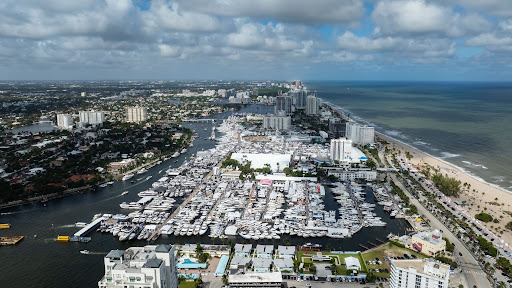
Image Credit: Marine Industries Association of South Florida
In Radtke’s experience, owners and captains often handle management themselves on smaller yachts, while vessels over about 50 meters are more likely to have a management company. She sees value in the extra oversight as the work grows. Owners still need to know who handles contracts, leave, travel home, and workplace complaints. “For crew members who live where they work and spend long periods away from family, the way those issues are handled can shape daily life aboard,” she says. “Guests can feel the effects in the service they receive.”
Before signing, Radtke would have someone with no financial stake in the purchase review the numbers. According to her, a broker can help assess what is available, and a captain can explain what a vessel will take to run. She notes that an independent adviser can examine whether the projected costs fit the owner’s finances, including a year with an expensive repair and little charter income.
Radtke likens owning a large yacht to running another business, even if it never takes a paying guest. There is a crew to pay and support, a vessel to maintain, and a budget that has to hold up when a major repair comes due. Before making an offer, buyers should know how they’ll use the yacht, who will run it, and whether they can comfortably afford to keep it running through a costly year.
Written in partnership with Tom White